The service sharpens all kinds of blades: the kind of things you'd expect, plus stuff like cleavers, scissors, and hunting knives. I sent in kitchen shears, two chef's knives, a pocket knife, a paring knife, a slicer, a bread knife, and (my favorite) a medium-fancy santoku with a carbon-steel edge. My friend Dave contributed more shears and a pocket knife.
This Is the Edge
Sharp knives make life in the kitchen much easier. You work faster, cleaner, better. Prep work becomes surprisingly pleasurable. Yet sharpening is a skill that takes time to learn; even when you're OK at it, it still takes a while to make a dull knife sing. While some folks say that everyone should sharpen their own knives, there are all sorts of good reasons to have an expert do it for you. Perhaps you're currently doing some combination of working remotely, homeschooling some children, feeding people, and trying to take care of yourself. I would understand if you’d prefer to flop onto a couch or lie in the grass at the end of the day, rather than taking up a new hobby.
I love putting a new edge on a dull knife, but I draw the line at repair. If that edge has dings or chips in it, I leave it to the professionals.
Knife Aid uses sharpeners with ceramic sander belts for most of its work, splintering into different belt types, grits, and other tools depending on the blade. Sharpening is about $10 to $15 per knife.
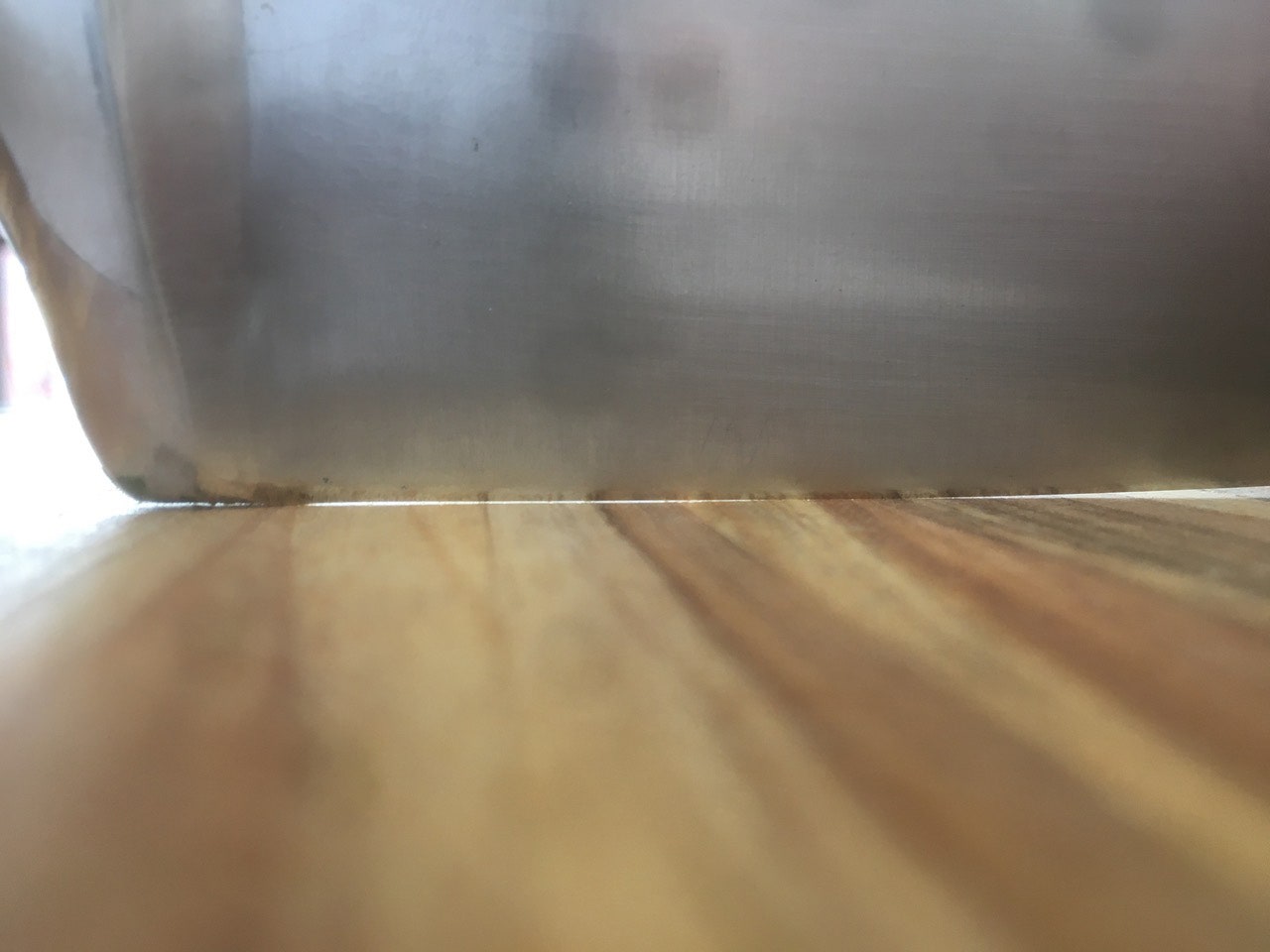
At first flush, things looked good when I got my knives back. The blades were pleasingly sharp. My favorite way to test this is by holding a sheet of newsprint by the top corner and drawing a blade across the paper's edge. It should slice through easily, and the Knife Aid blades did a good job here. I also made a little before-and-after spreadsheet of everything I sent in and was able to note that things like the tiny dings had been removed from my santoku, the slicer, and both pairs of shears. I was particularly impressed with the work done on Dave's pocket knife, a Gerber with a half-lentil sized chip in the center of the edge; the Knife Aid sharpener worked the whole blade down to remove the ding and preserve its original swoop.
Similarly, a bit of the curve was restored to an old favorite, my Wusthöf Grand Prix chef's knife that I got as a gift at the beginning of my cooking career from my friends Shannon and Eric. That knife had been fairly ruined 20 years ago by a drive-up lawnmower blade specialist in Mill Valley, California. He'd been overzealous, creating a gap that was quite noticeable when chopping a pile of parsley; the bits under the inch of the blade closest to the handle wouldn't be sliced all the way through. A subsequent repair effort here in Seattle left it better but lifeless. Now, with Knife Aid, a bit of that swoop had been restored.



Comments
Back to top